




References
MUSEUM OF FINE ARTS ANTWERP - KMSKA
Awarded a grant to complete a one-year internship — 2023–2024 — at the Royal Museum of Fine Arts Antwerp — KMSKA — as a painting conservator-restorer.
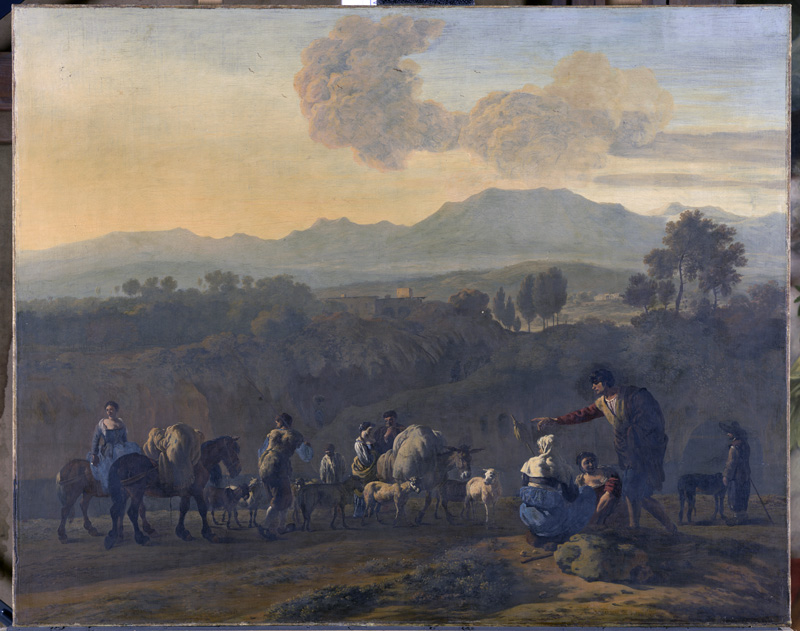
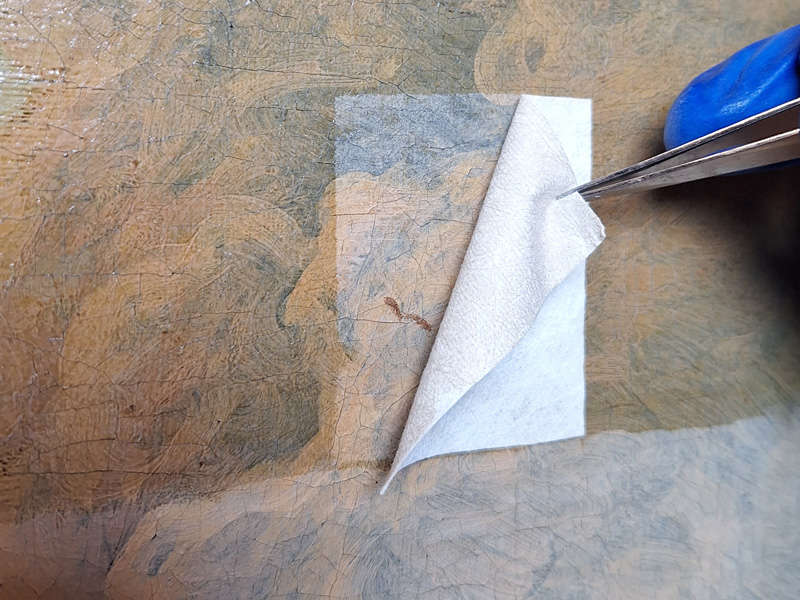
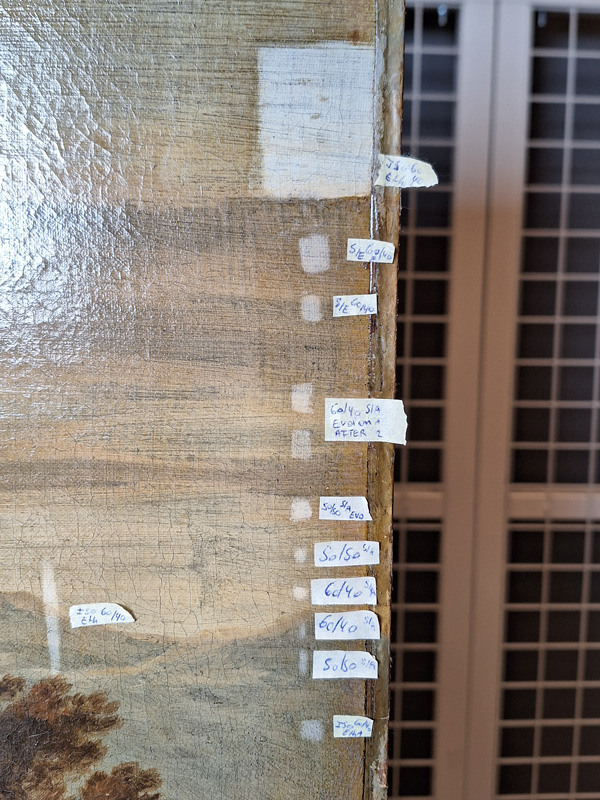
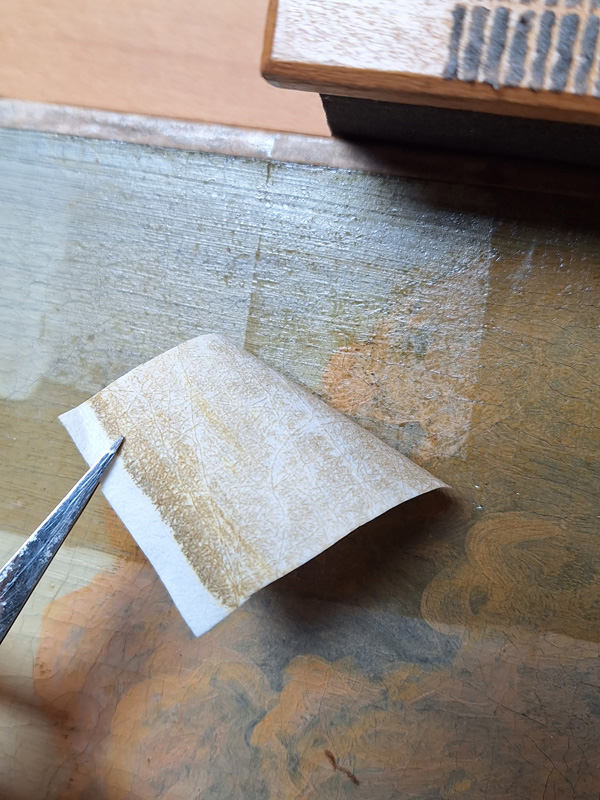
Restoration of the painting “Roman Campagna” by Karel Dujardin — 1675, oil on canvas, 85 × 107.5 cm.
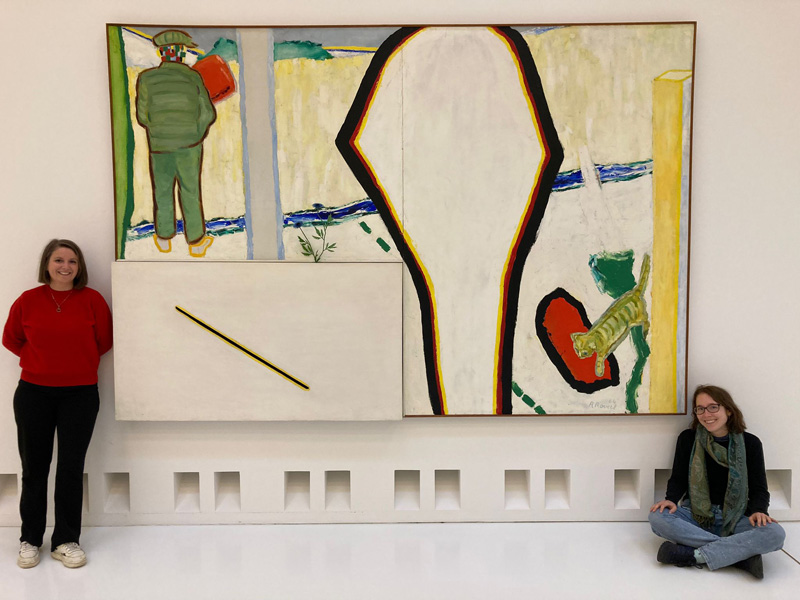
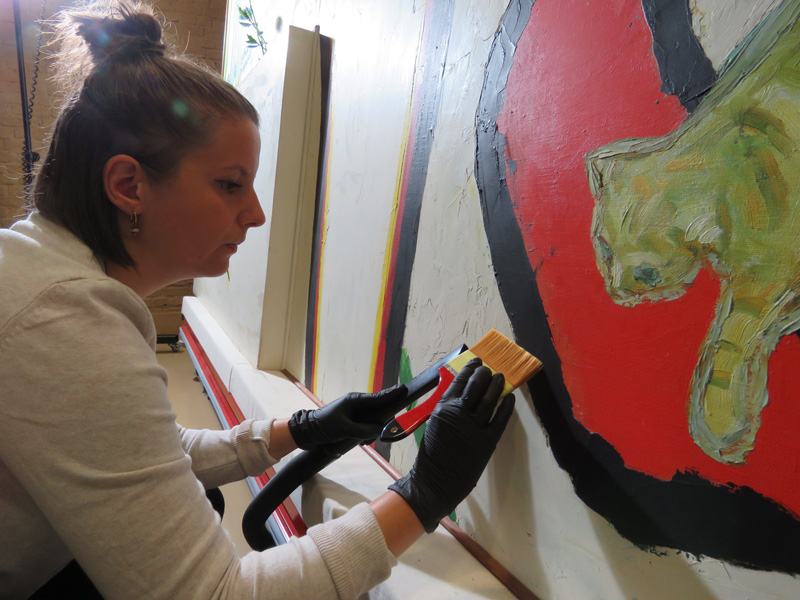
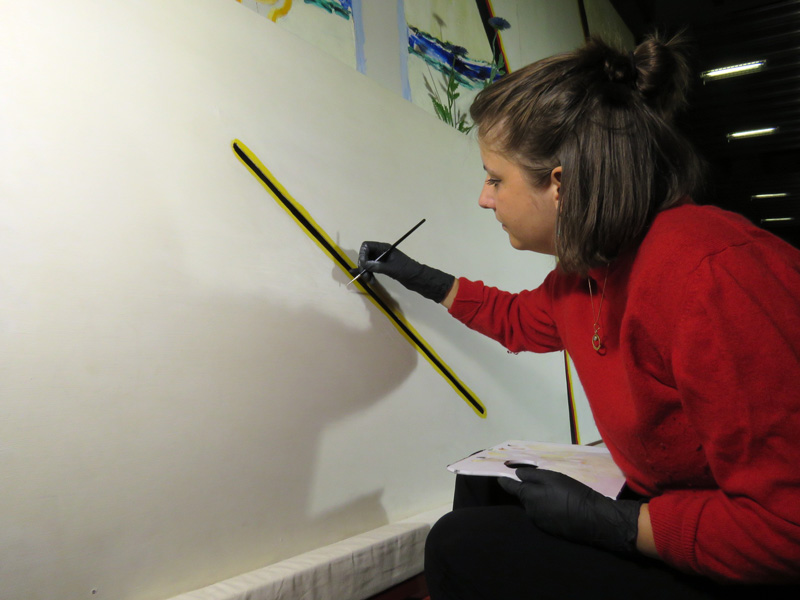
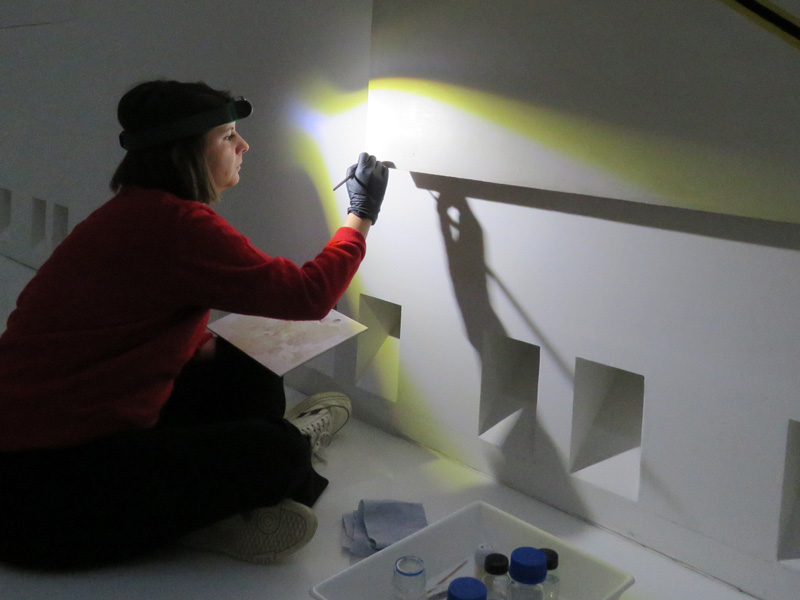
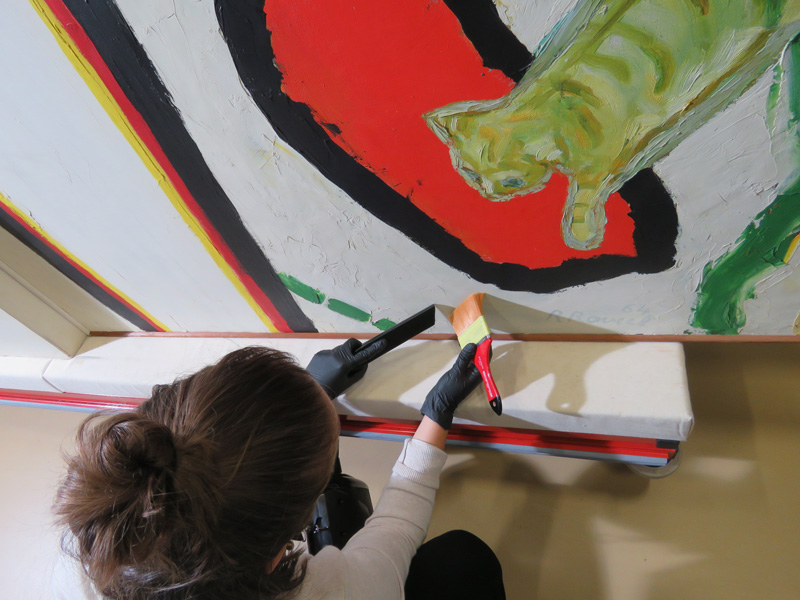
Conservation treatment of the work “The Walk” by Roger Raveel — 1964, 202.5 × 299 × 9 cm — for the permanent exhibition in the museum’s modern art section.
Restoration of a painting: “Roman Campagna” by Karel Dujardin, 1675, oil on canvas, 85 × 107.5 cm.
Project carried out with the support of the Sofina Boël Fund, managed by the King Baudouin Foundation.
Karel Dujardin, Roman Campagna, inv. no. 965, photo: Rik Klein Gotink, Collection KMSKA – Flemish Community — public domain.
(with PhD researcher Lowie Vercruysse)
X-ray fluorescence is an analytical technique that can be used to determine the chemical composition of a wide variety of sample types, including solids, liquids, slurries and loose powders. X-ray fluorescence is also used to determine the thickness and composition of layers and coatings. From supporting material identification and quality control in industry to preserving cultural heritage and advancing scientific research, XRF continues to play a central role in improving our understanding of the elemental composition of materials.
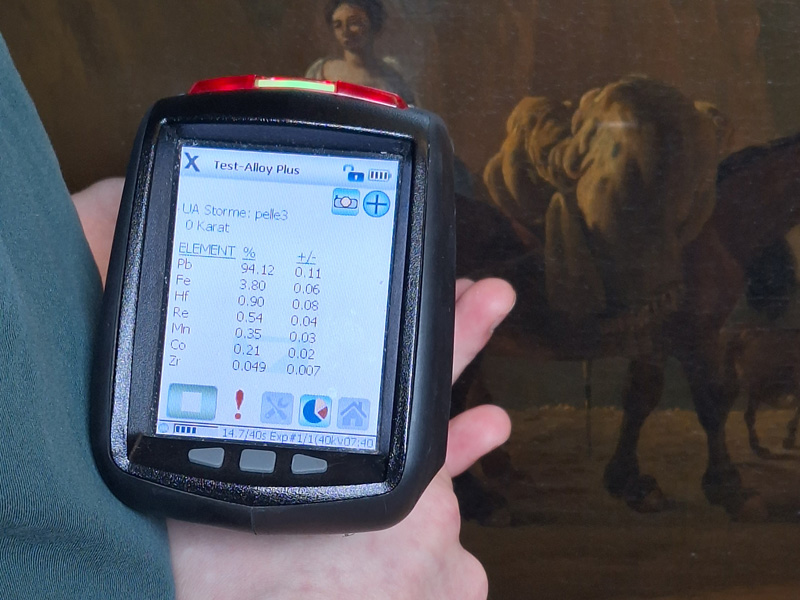
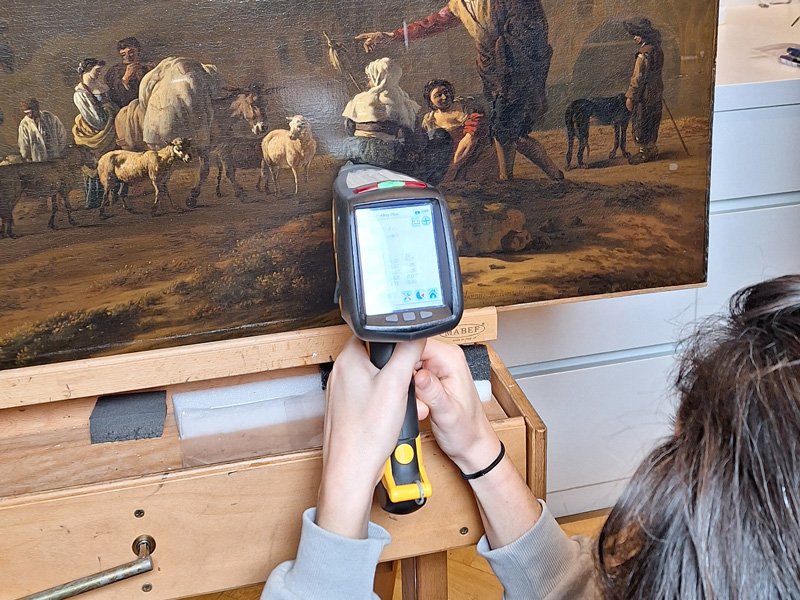
X-ray fluorescence spectrometry — XRF — is a non-destructive analytical technique used to determine the elemental composition of an object or sample made of inorganic materials.
In this case, the handheld device makes it possible to identify the pigments present in the painting without even needing to take a sample: the method is therefore completely non-invasive. This method was used to identify the blue pigments present in Karel Dujardin’s painting, which had degraded in an unusual way.
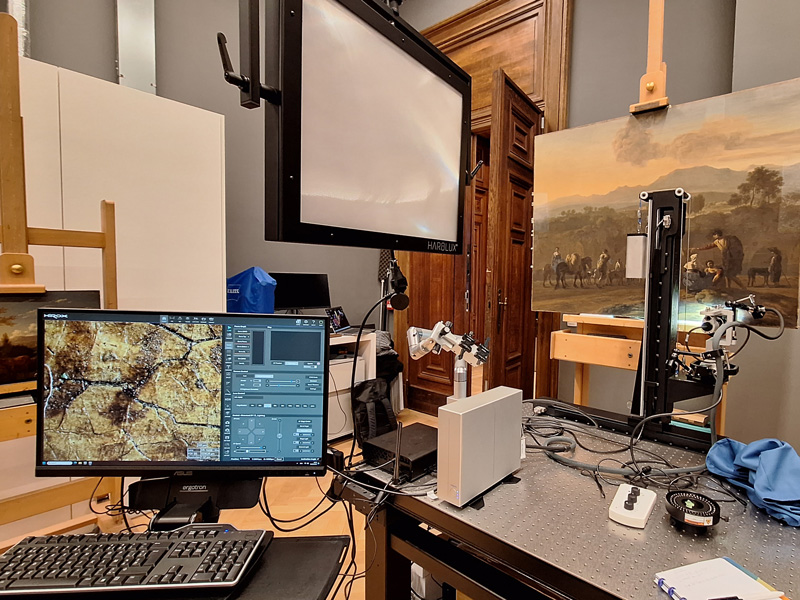
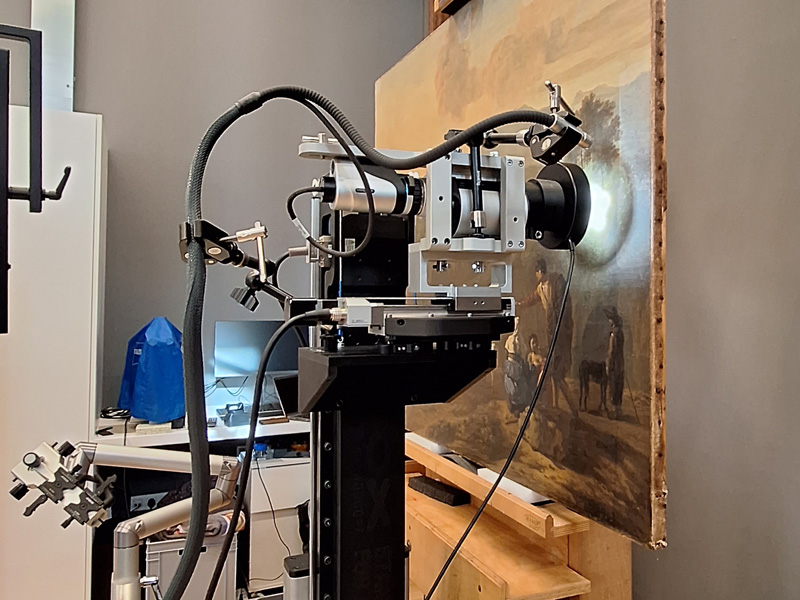
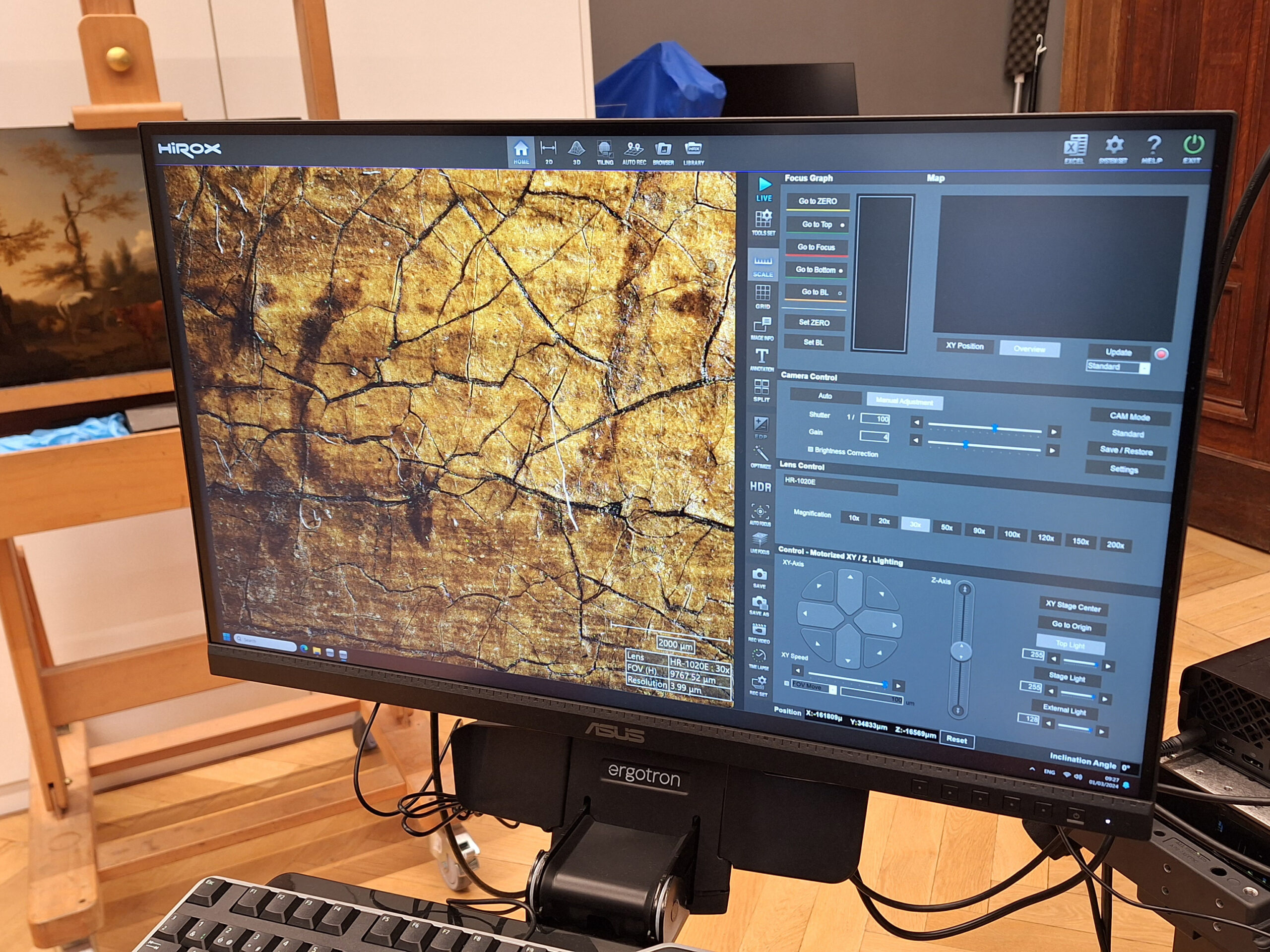
A digital microscope — DM — is a microscope fitted with a camera — CMOS — instead of an eyepiece, displaying the digitally acquired image on a large screen. It is a portable high-resolution analytical device that enables 3D measurements and covers a magnification range from 0.1× to 10,000×.
Hirox microscopy systems are used by many museums around the world for the non-destructive inspection and measurement of all kinds of objects. They are used for research and conservation purposes and offer unique versatility in terms of format, magnification range and lighting techniques.
Hirox 3D digital systems have been used to inspect major works by Van Gogh, Vermeer, Munch, Rembrandt, Picasso and many others in museums such as the Louvre, the Rijksmuseum and Tate Modern, for example.
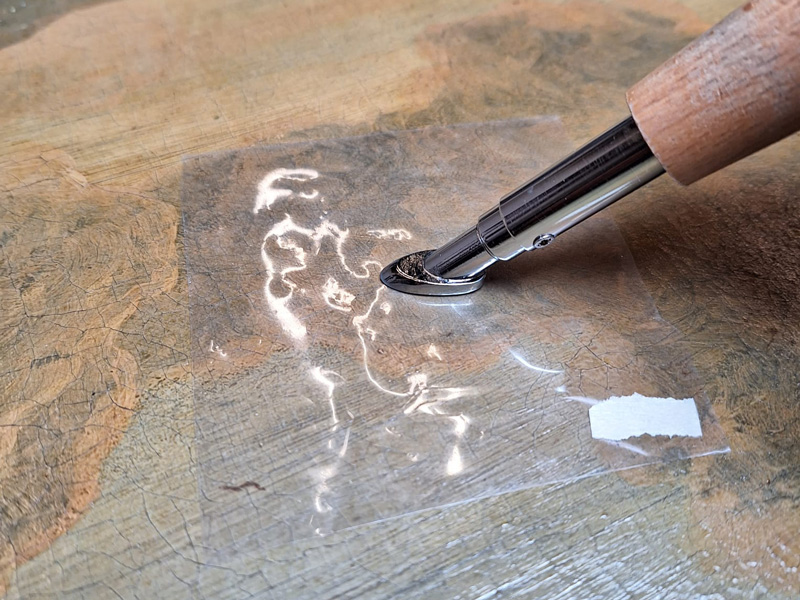
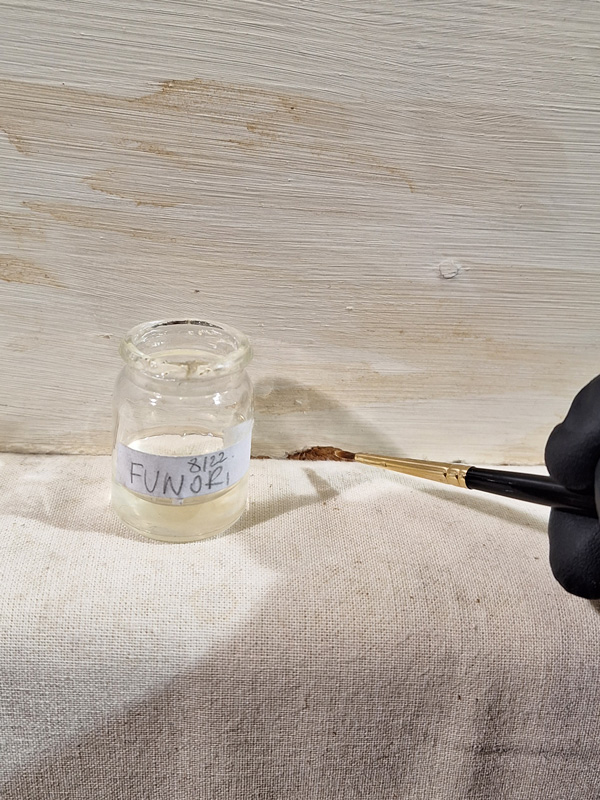
Fixing of the liftings on the paint layer
Cleaning of the paint layer
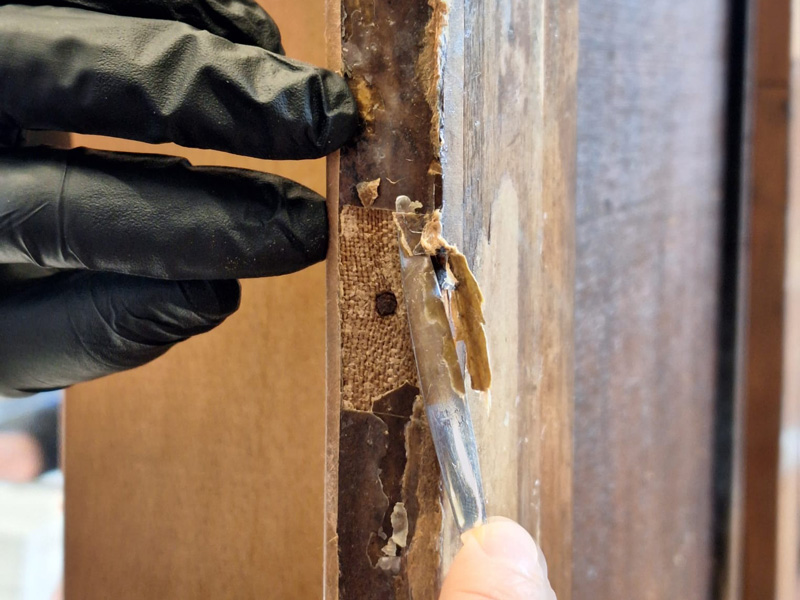
Varnish removal
Treatment in progress
Roger Raveel, “The Walk”, 1964, 202.5 × 299 × 9 cm.
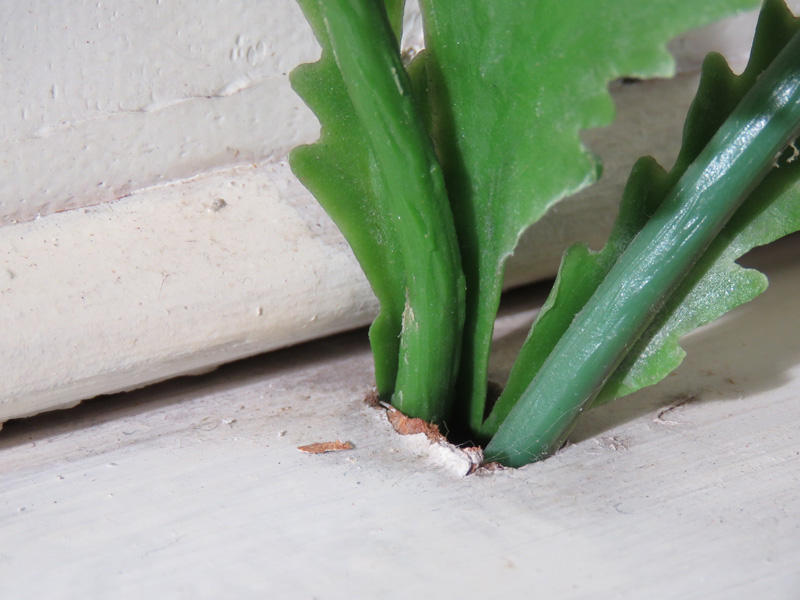
Conservation treatment for the permanent exhibition in the museum’s modern art section. Surface cleaning and retouching.