


Projects
Olloy sur Viroin
WALL PAINTING
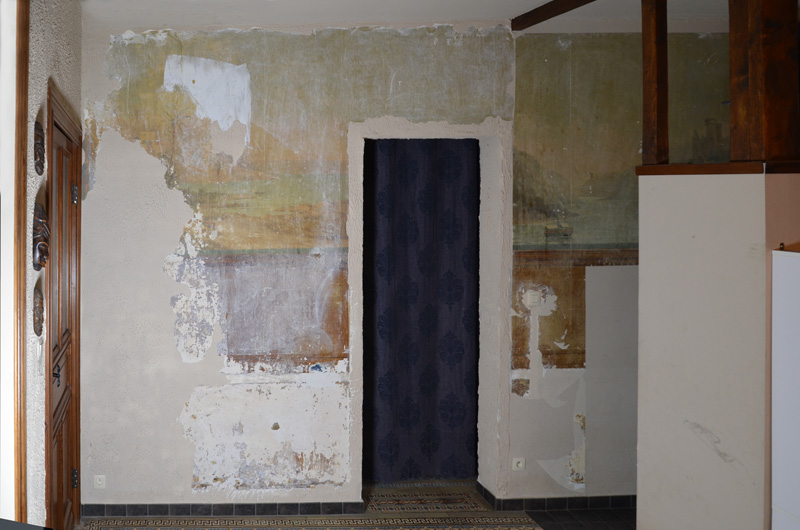
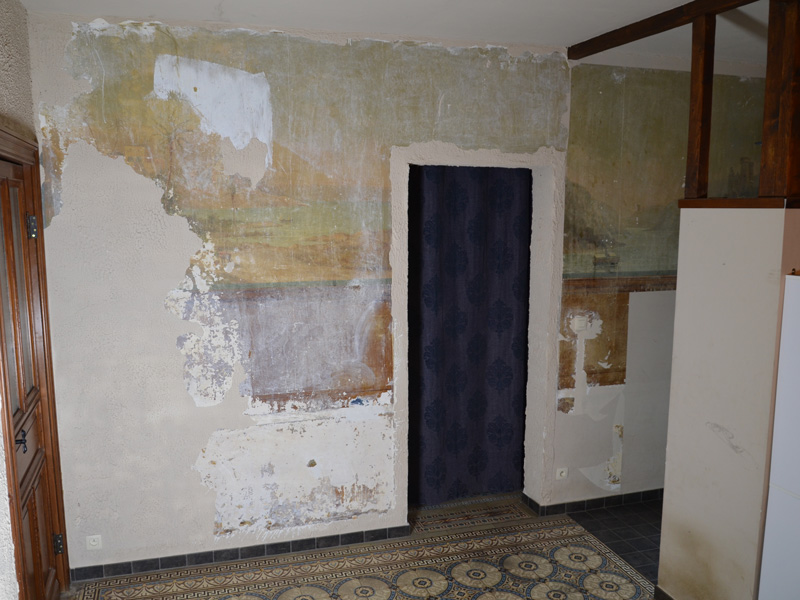
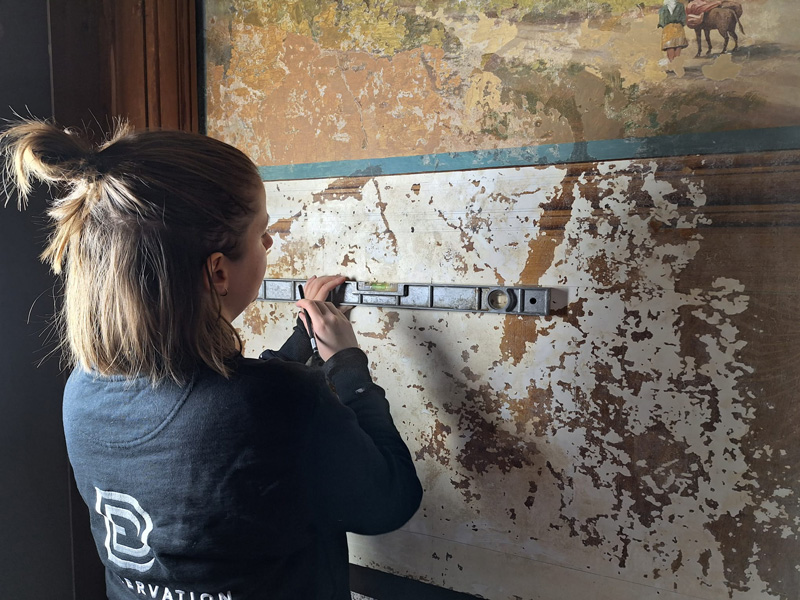
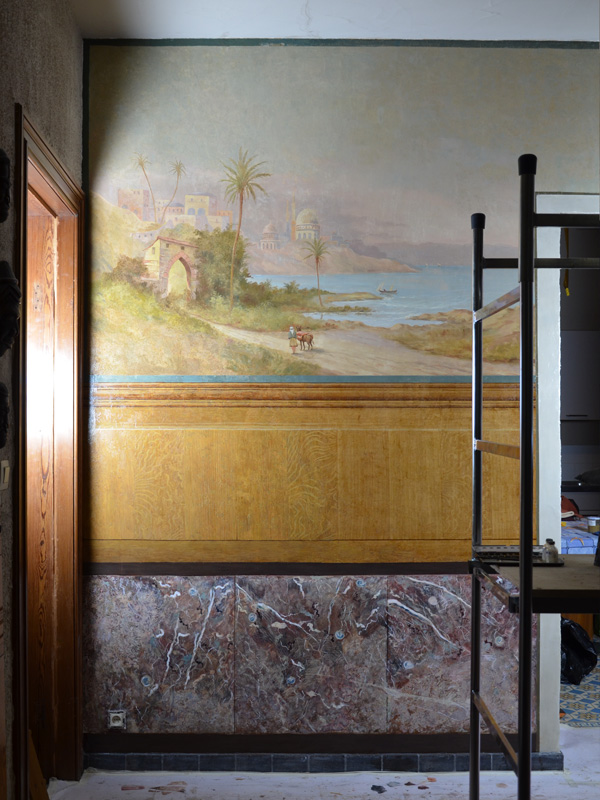
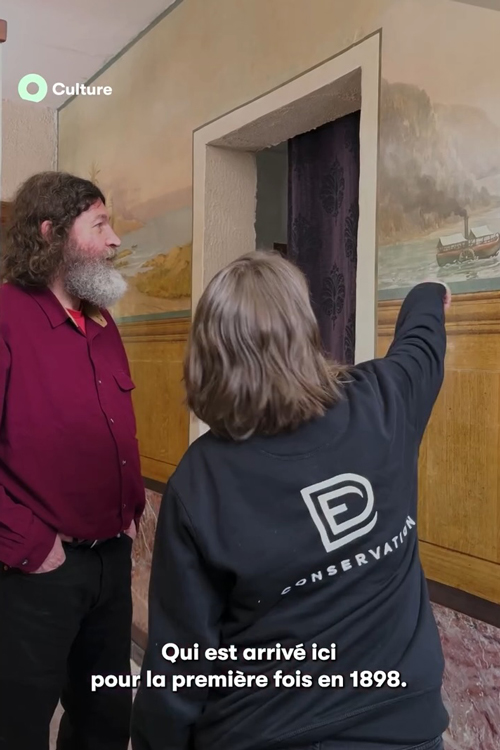
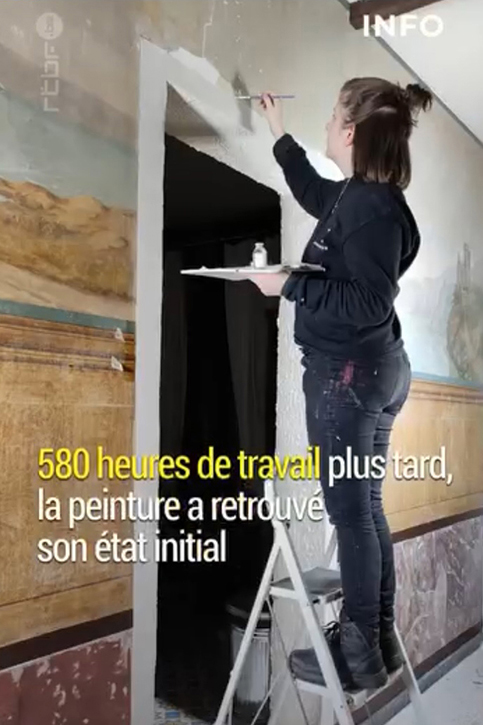
The work is a wall painting — not a fresco — in oil on lime plaster. It is a panoramic landscape depicting a North African scene and a view of the Rhine, with faux oak wood and faux marble decoration — Philippeville marble. 580 hours of work, equivalent to three and a half months, on a surface of 12 m².
FAMILY PAINTING
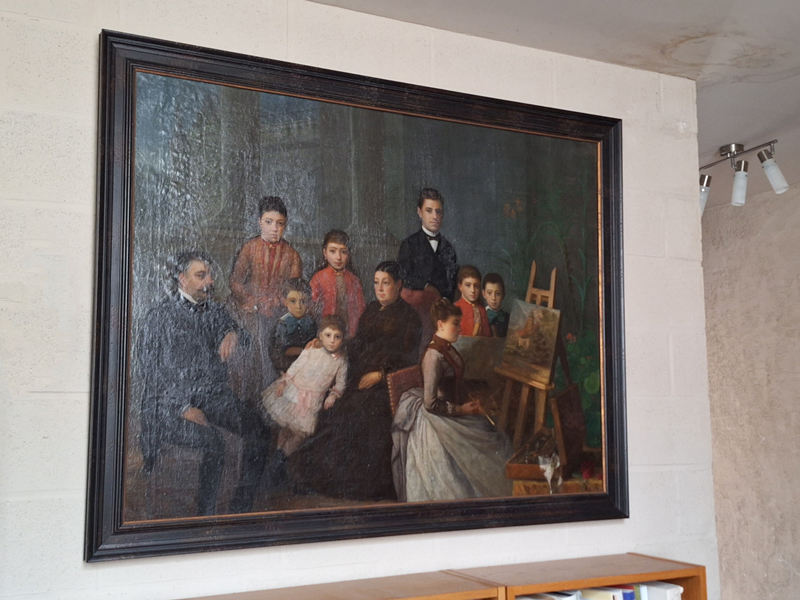
Restoration treatment: the painting was heavily soiled and the varnish had oxidised. In addition, the painting had suffered water damage and showed significant moisture-related problems, making the paint layer friable and highly sensitive.
12 m² — unsigned, after Léon Pouteau — early 20th century — located in Olloy-sur-Viroin, Viroinval, in a private house.
The work is a wall painting — not a fresco — in oil on lime plaster. It is a panoramic landscape depicting a North African scene and a view of the Rhine, with faux oak wood and faux marble decoration — Philippeville marble. 580 hours of work, equivalent to three and a half months, on a surface of 12 m².
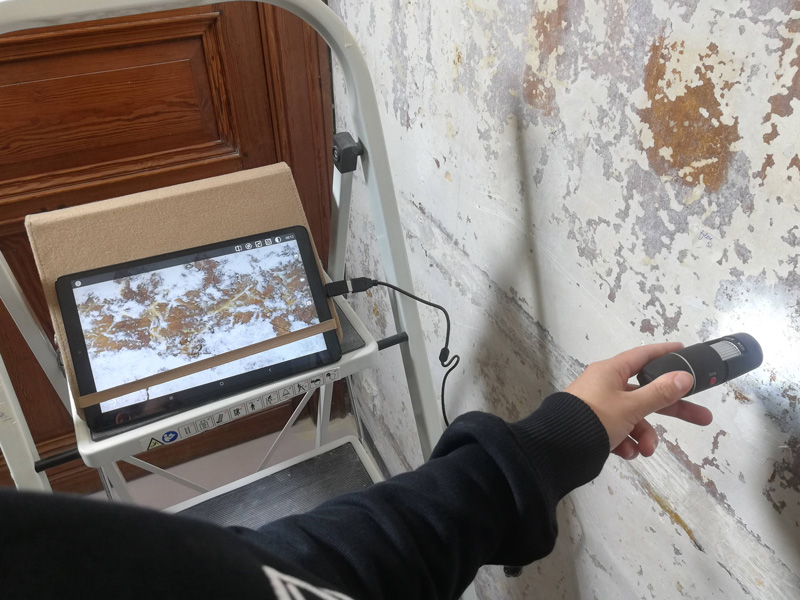
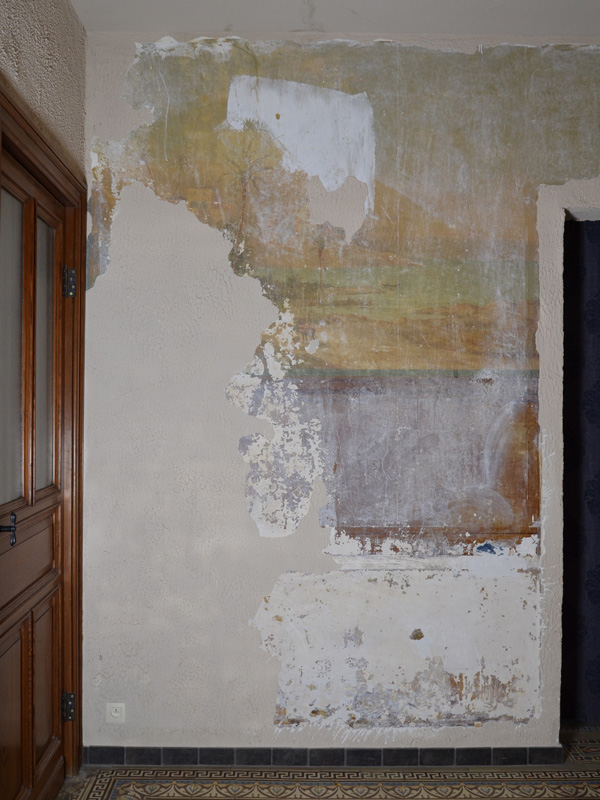
The paint layer was covered in places with plaster and wallpaper.
A layer of surface dirt was visible across the entire work.
The varnish present on the paint layer had oxidised and yellowed over time. It was thick, yellow and dark, masking the original colours of the work. Due to its degraded condition, it no longer fulfilled its protective role. It also concealed the depth of the work and the saturation of the colours.
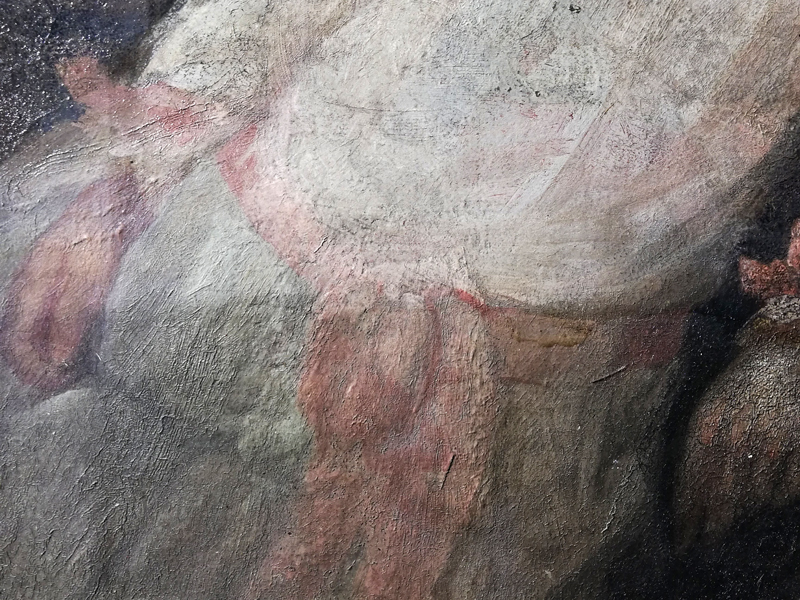
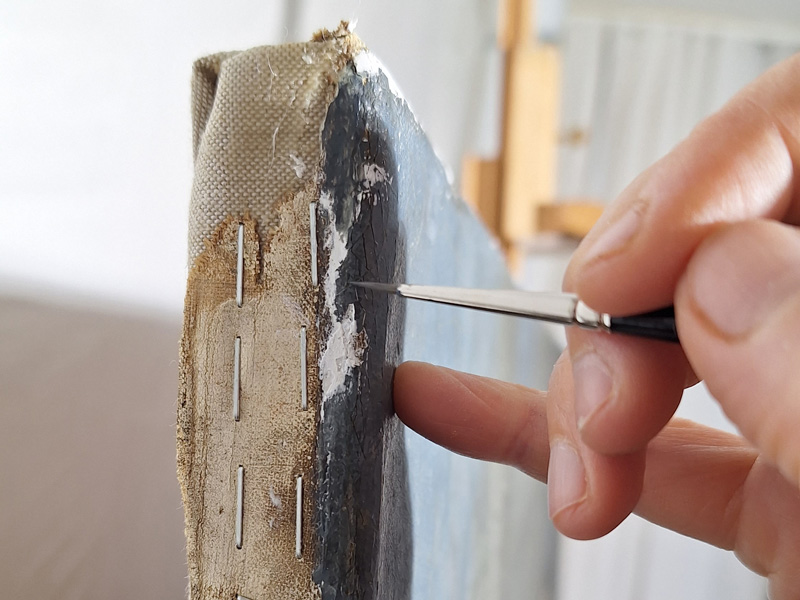
Numerous losses were visible, indicating a major adhesion problem between the paint layer and the support. Adhesion problems were also observed in the support itself — the plaster was friable.
Blanching was visible in the varnish, most likely caused by significant moisture entering the wall — probably linked to the cellar.
Previous restorations were visible — old retouching and overpaint.
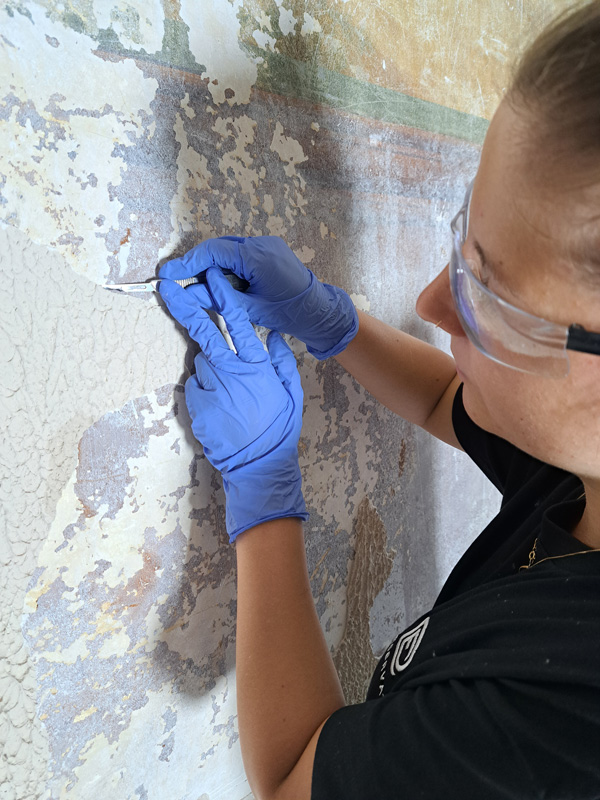
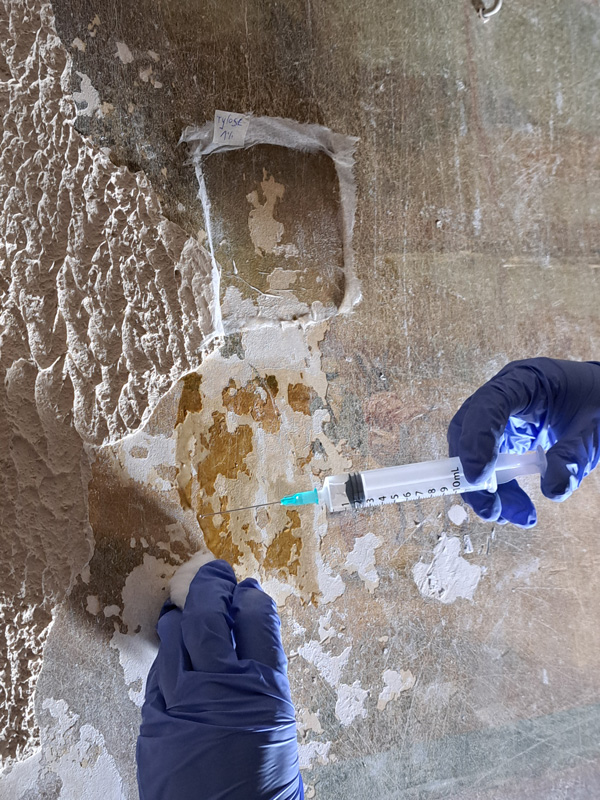
Removal of the plaster with a scalpel
Fixing of the paint layer using a suitable adhesive
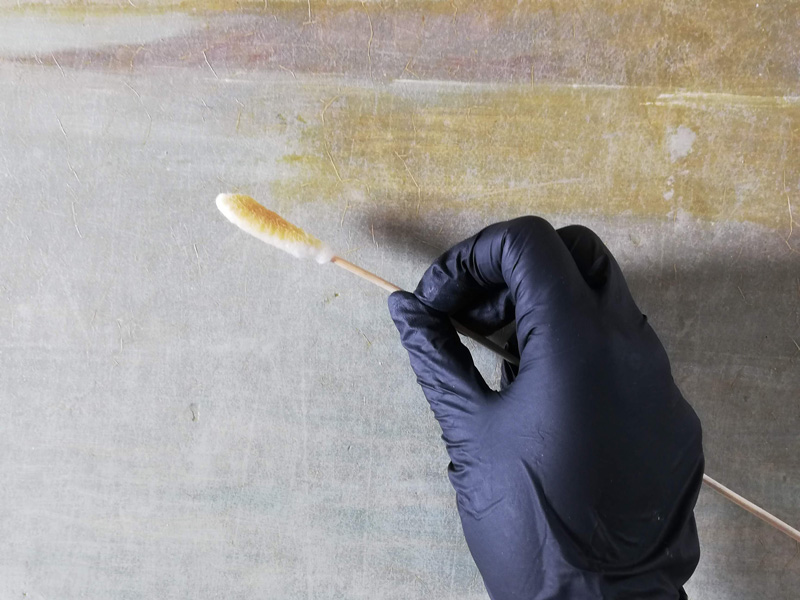
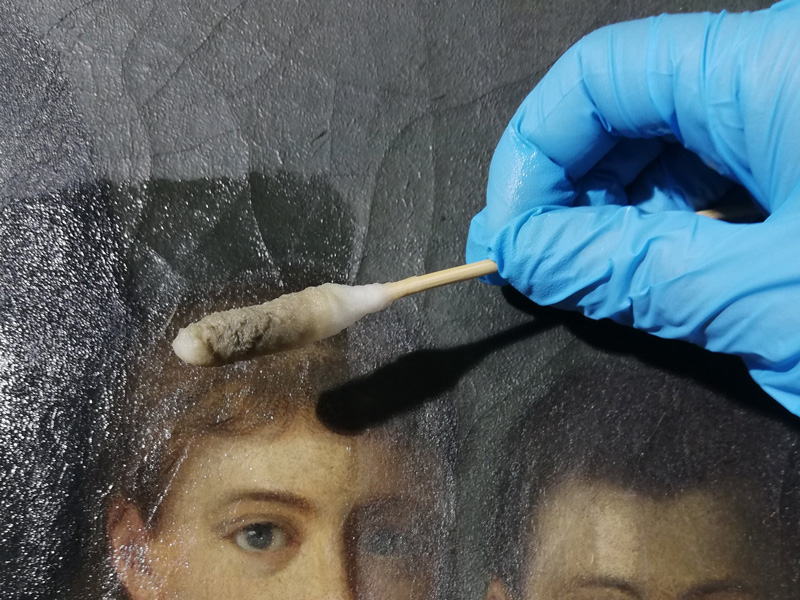
Cleaning of the paint layer using cotton swabs and an aqueous solution
Varnish removal — removal of the oxidised, yellowed varnish — using cotton swabs and solvent mixtures
Filling of losses
Application of an isolating layer over the fills
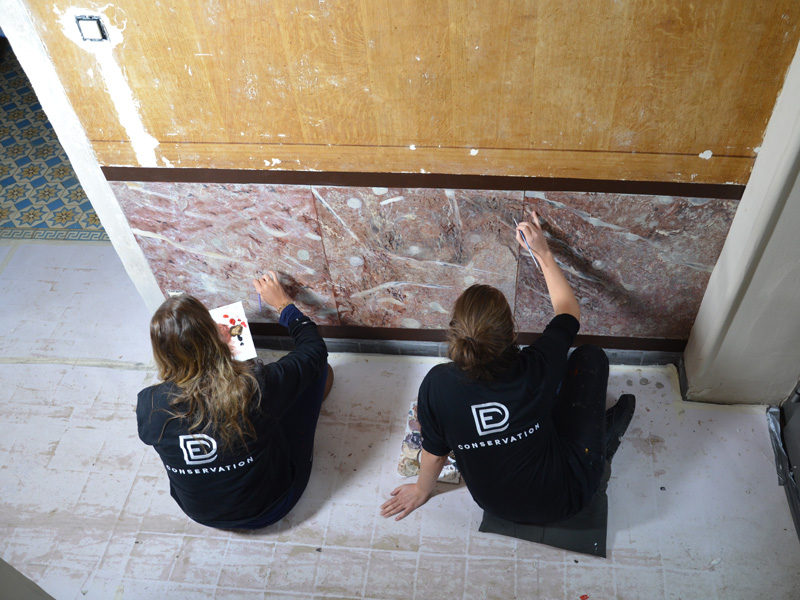
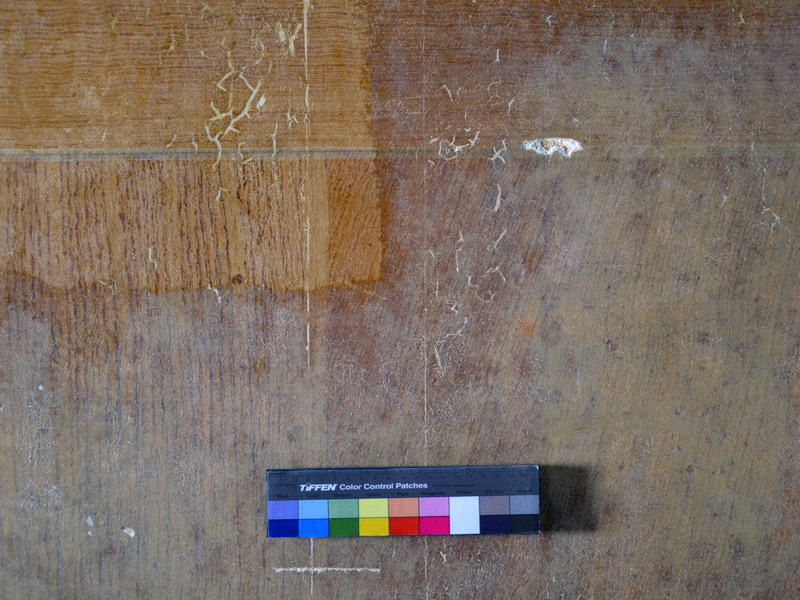
Retouching — base tones — of the filled areas: base tones, reconstruction of the faux marble decoration using an existing original section, and reconstruction of the faux wood decoration also based on the surviving original section.
Two layers of synthetic varnish applied with a spalter brush
Retouching with synthetic varnish and pigments on the base tones.
Application of a synthetic varnish with wax using a spray gun.
The artwork can once again be seen in its entirety.
The condition of the artwork is no longer at risk.
The readability of the artwork has been restored thanks to the treatments and retouching carried out.
All steps are reversible because the materials used were carefully selected and applied in a very specific order. As a result, the interventions carried out can be removed in the future without altering the original.
The restoration products used are known to have been scientifically tested in laboratories in order to guarantee their stability over time — for example, a synthetic varnish that does not yellow under UV light.
The aim of the restoration is to preserve the artwork in its current condition; returning it to its original state is impossible. The work is now conserved and stabilised, ensuring its long-term preservation and allowing it to remain visible for future generations.
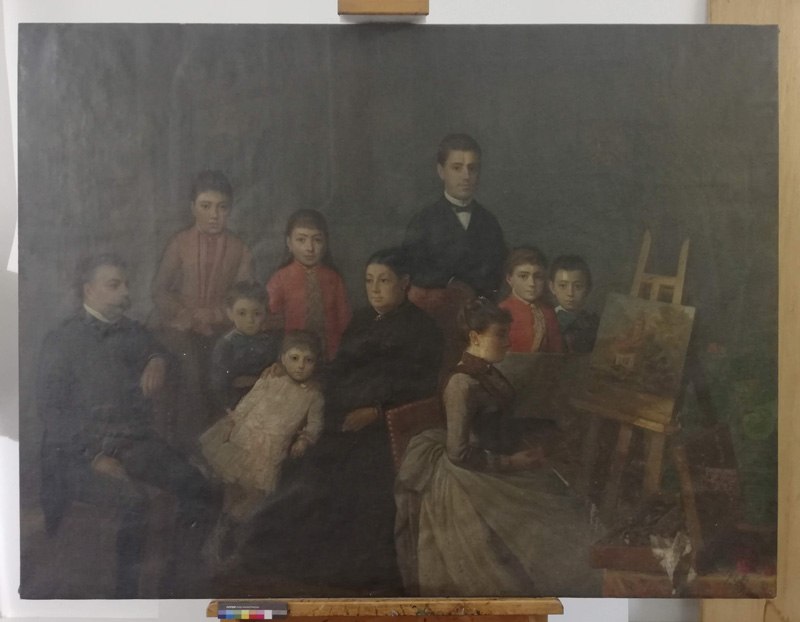
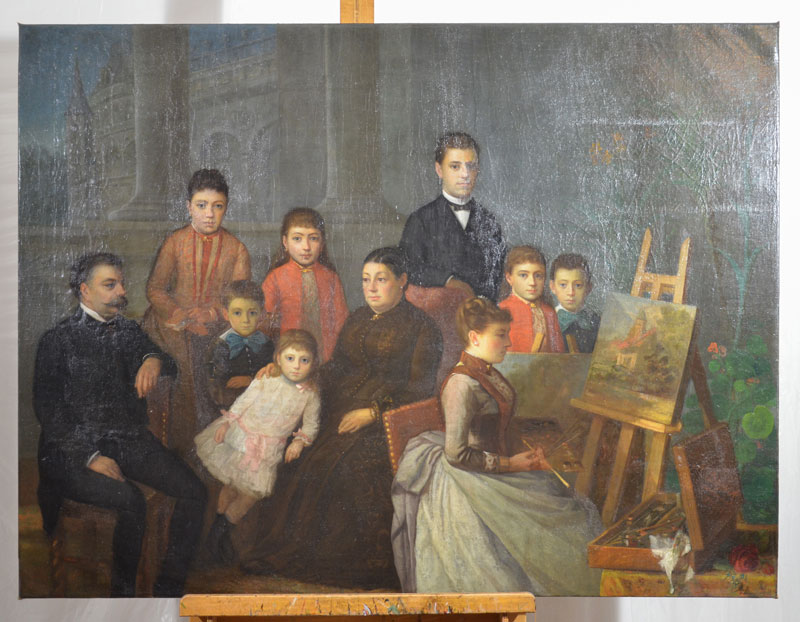
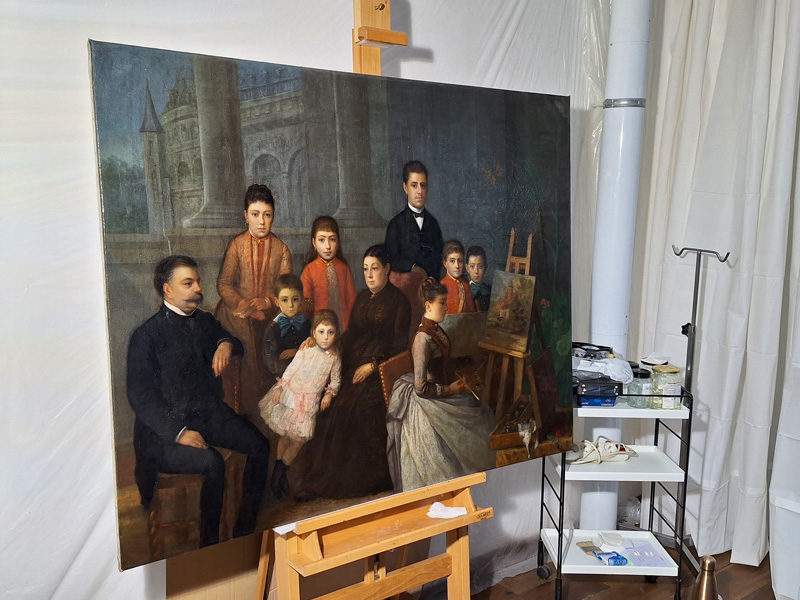
Family painting — 150 × 120 cm — late 19th century — signed
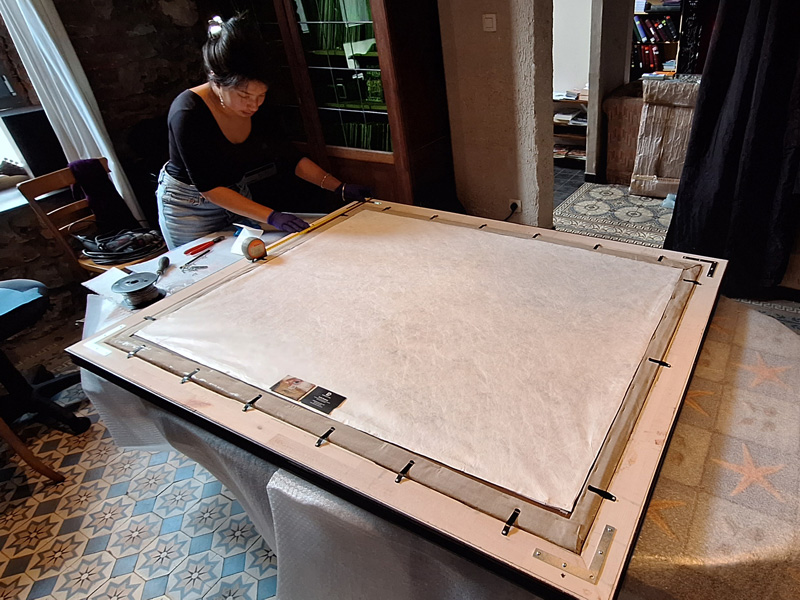
Restoration treatment. The painting was heavily soiled and the varnish had oxidised. In addition, the painting had suffered water damage and showed significant moisture-related problems, making the paint layer friable and highly sensitive.
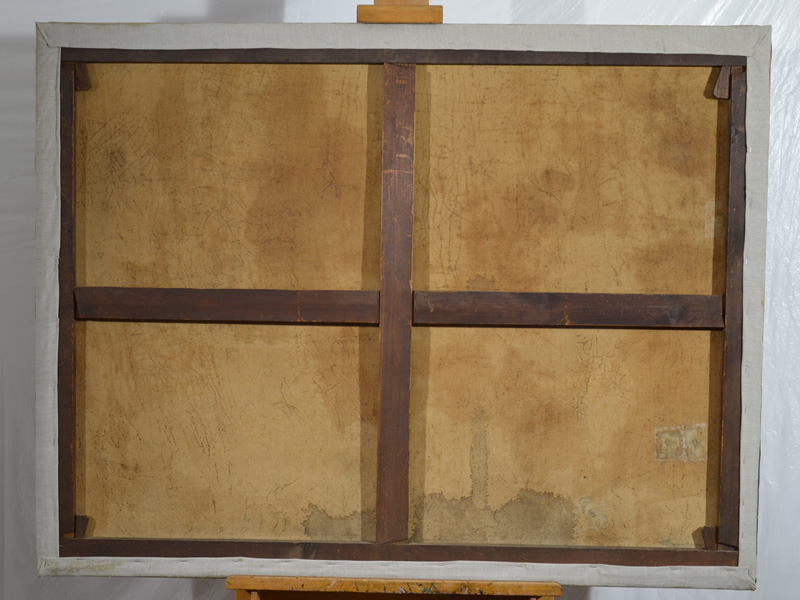
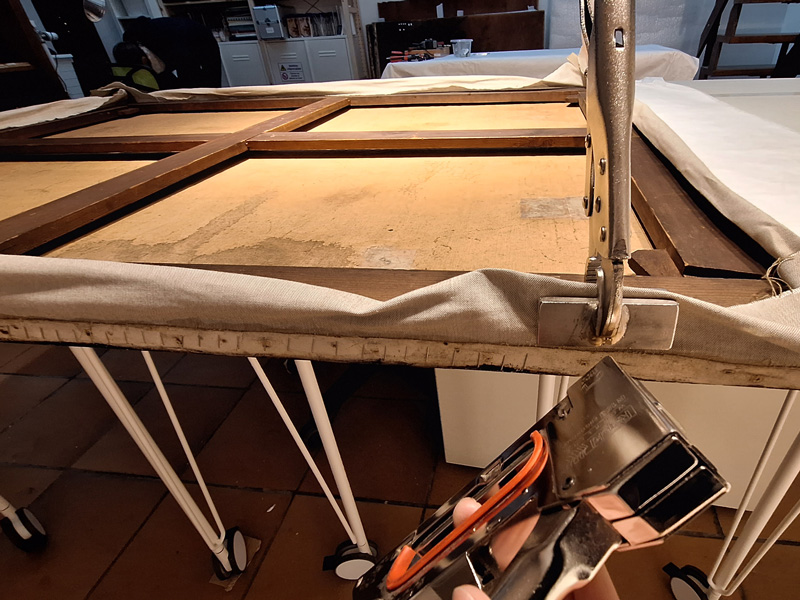
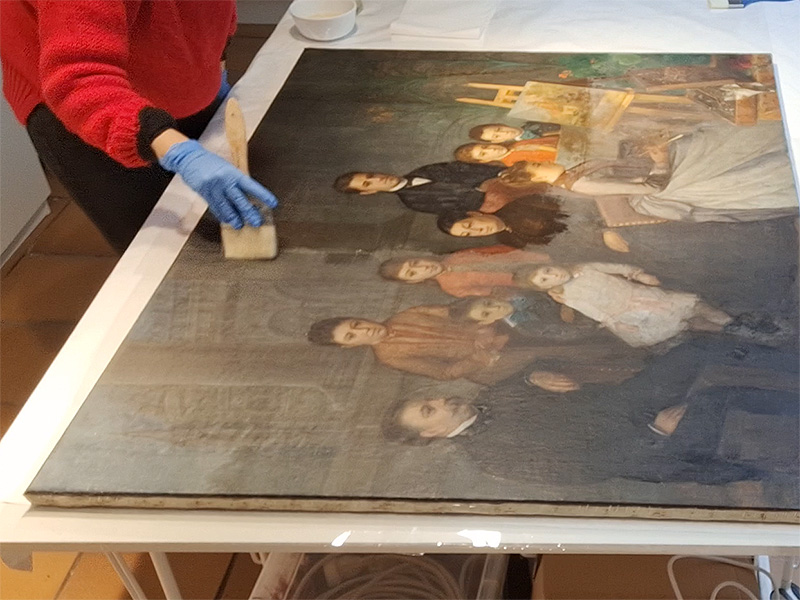
Relaxing the support and treating it for moisture — pressing under blotting paper — absorption and slow drying to prevent shrinkage and deformation of the support
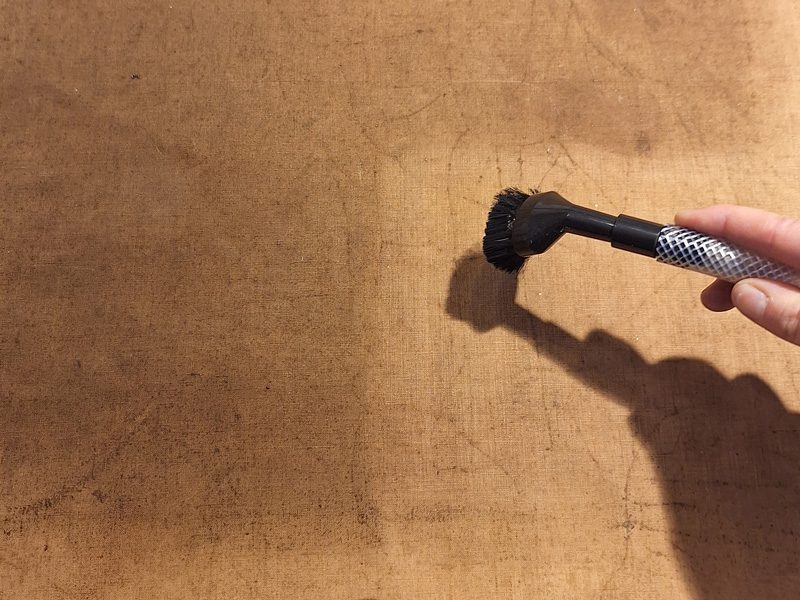
Cleaning of the reverse
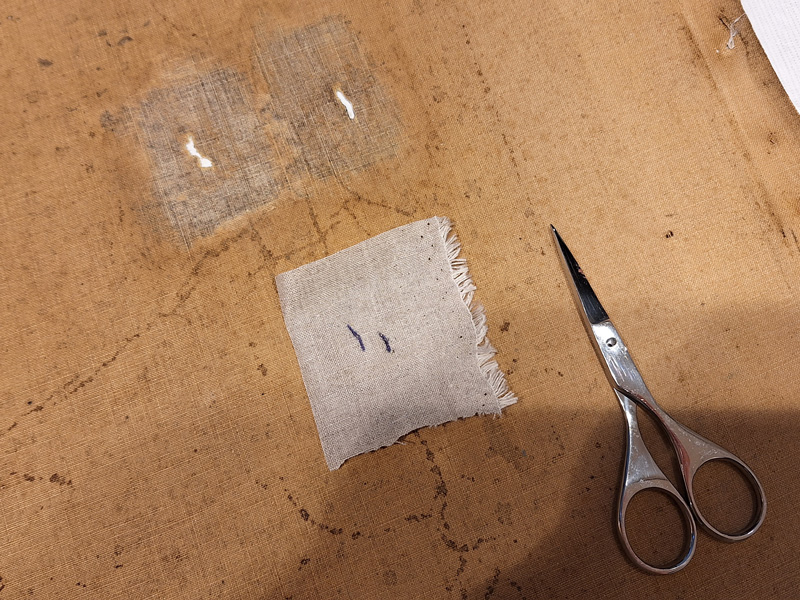
Tear repair
Cleaning of the paint layer and varnish removal
Varnish removal test
Filling of losses
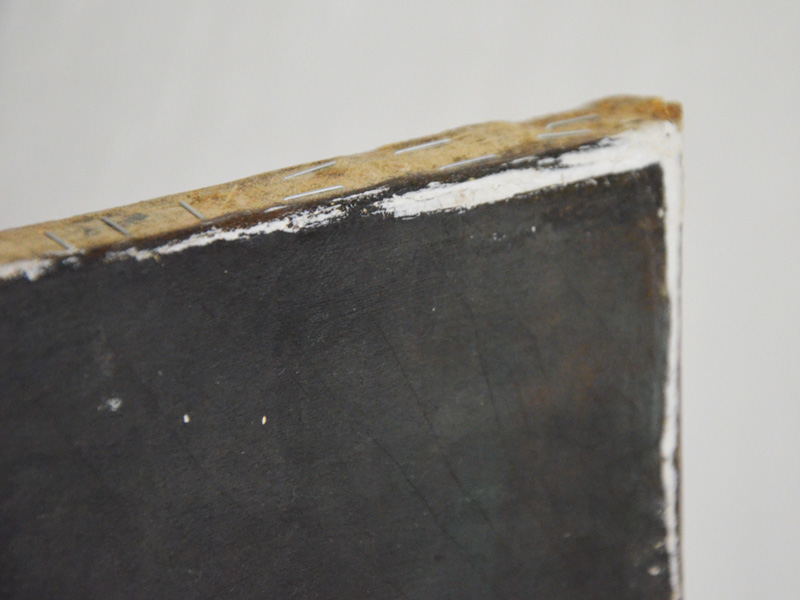
Stretching the canvas onto its stretcher
First layer of varnish applied with a spalter brush
Retouching with varnish and pigments
Final layer of synthetic varnish applied with a spray gun
Placement in its new frame
Hanging